Centre for Climate
Impact Adaptation
A Systems Approach to Climate Adaptation, Resilience and Mitigation in East & North-East India
About CCIMA
An inter-disciplinary,multi-institutional initiative, comprising an international consortium of scientists, policy specialists and climate practitioners, focused on climate adaptation, resilience, and mitigation in east and north-east India.
CCIMA as a center is conceptualized to bring together a team of experts from different fields i.e., physical sciences, social sciences, economics, policy, and climate practice to work together for developing India’s first systems-based climate adaptation model, backed by rigorous science, real community impact, and scalable policy tools.
To advance a climate-resilient future by translating climate science into impactful adaptation solutions for ecosystems, communities, and economies.
Our Mission
To generate and integrate interdisciplinary knowledge on climate impacts, risks, and adaptation strategies.
To support evidence-based decision-making through research, innovation, and policy engagement.
To strengthen adaptive capacity and resilience of vulnerable communities, sectors, and ecosystems.
To foster collaboration among academia, government, industry, and civil society for scalable climate adaptation solutions.
To build human and institutional capacity through education, training, and outreach.
Core Objectives
- Study the effects of climate change on people, land, ecosystems, and the economy in eastern and north-eastern India, through research and fieldwork.
- Develop and test practical adaptation solutions, using a systems approach and involving local communities in pilot projects.
- Support governments in creating policies that help bring these adaptation solutions into action.
- Build skills and capacity in local communities, so that these solutions can be continued and sustained in the long term.
OPERATIONS & OFFICIAL LAUNCH
CCIMA operates within BCKIC (Bhubaneswar City Knowledge Innovation Cluster), a Section 8 company under theauspices of the Office of the Principal Scientific Advisor to the Govt. of India.
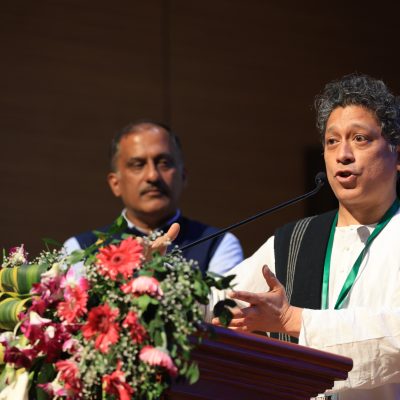
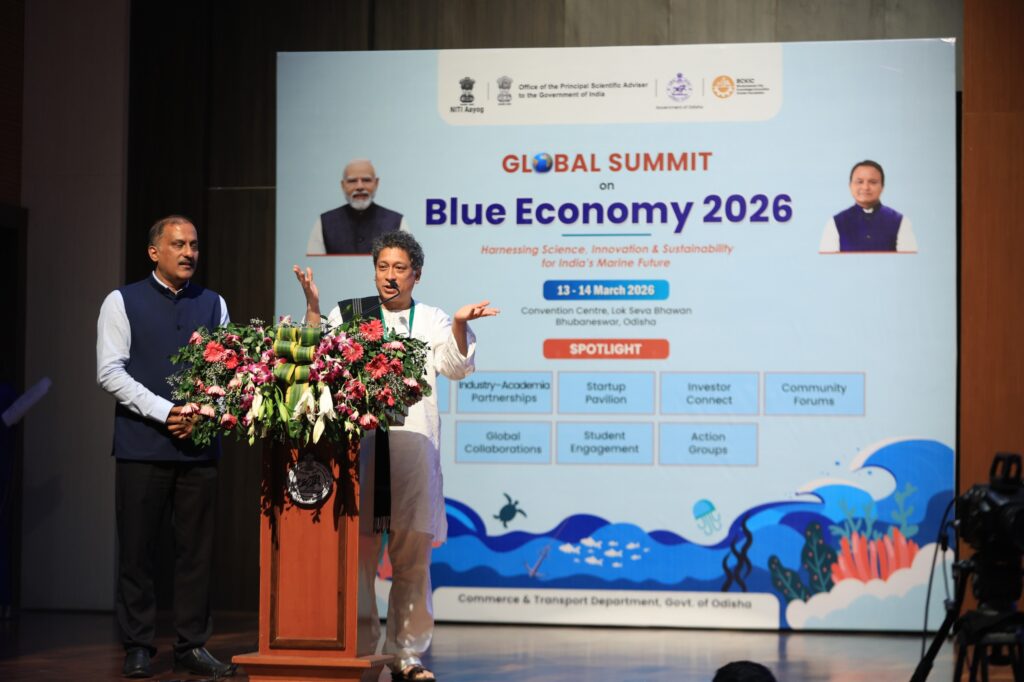
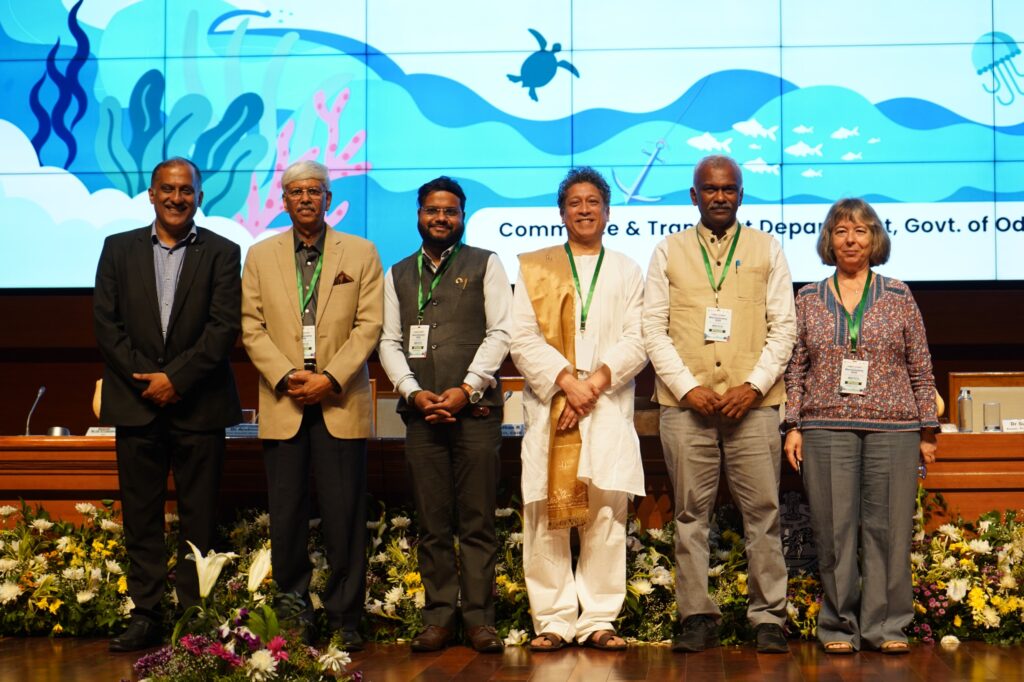
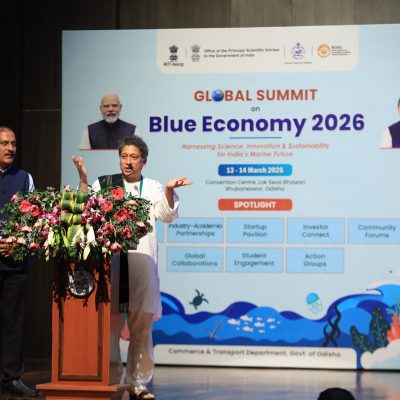
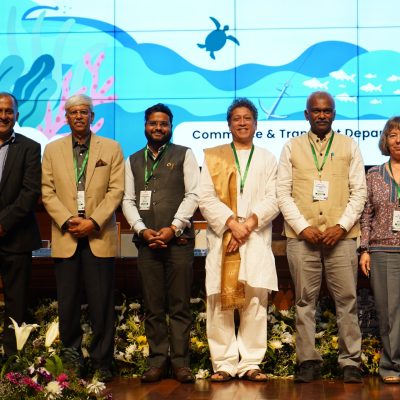
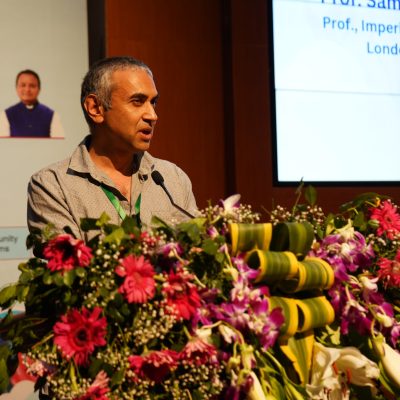
Officially CCIMA was launched on 13-14th march, 2026 at Global summit on Blue Economy.
What does CCIMA do ?
Builds the data and institutional backbone needed to transform climate adaptationfrom disconnected pilots into a scalable, evidence-based regional system by integrating:
- Real-time environmental & socio-economic monitoring
- Advanced, AI-driven data analytics and modelling
- Field-tested adaptation pilots
- Community-capacity building
- Policy co-development
Enables adaptation strategies that are environmentally sustainable, socially equitable and economically viable,
while maximizing synergy between short term climate adaptation and long term mitigation.
The Challenge: Why Bhitakarnika

India’s eastern & north-eastern states are exceptionally vulnerable to climate change
Direct impacts
Increasingly severe floods, droughts, cyclones, heat waves, sea-level rise,and coastal erosion.

Secondary impacts
Accelerated resource depletion; loss of food, water, and energy security; severe pollution; large-scale climate migration; violent conflict.

Catastrophically affects the lives and livelihoods of nearly 280 million people (20% of India’s pop.), mostly rural and poor.

Yet climate adaptation here remains fragmented
incomplete data, isolated pilot projects, underdeveloped methodologies, weak policy integration , underinvestment, limited scalability, and persistent (and increasing) vulnerability.
The Challenge
India’s eastern & north-eastern states are exceptionally vulnerable to climate change
Direct impacts
Increasingly severe floods, droughts, cyclones, heat waves, sea-level rise,and coastal erosion.
Yet climate adaptation here remains fragmented
incomplete data, isolated pilot projects, underdeveloped methodologies, weak policy integration , underinvestment, limited scalability, and persistent (and increasing) vulnerability.
Secondary impacts
Accelerated resource depletion; loss of food, water, and energy security; severe pollution; large-scale climate migration; violent conflict.
Catastrophically affects the lives and livelihoods of nearly 280 million people (20% of India’s pop.), mostly rural and poor.
Primary
Increasingly severe floods, droughts, cyclones, heat waves, sea-level rise, and coastal erosion.
Secondary
Accelerated resource depletion, loss of food, water, and energy security, severe pollution, large-scale climate migration, and violent conflict.
Policy
Isolated pilot projects, under developed methodologies, weak policy integration , limited scalability, and persistent vulnerability.
Social
Catastrophically affects the lives and livelihoods of nearly 280 million people (20% of India’s pop.), mostly rural and poor.
Official Launch of CCIMA
Global Summit on Blue Economy, 2026
Flagship Deployment in the Bhitarakanika Mangrove Region (BMR), Odisha
Mangroves are critical for coastal health and economy, but the BMR is reeling under multi-faceted climate impacts.
CCIMA’s first phase establishes a high-risk coastal climate test bed to develop the first fully integrated adaptation playbook for eastern/north-eastern India.
Pathway to Scale
- Expansion to 10+ sites across eastern and north-eastern zone.
- Connect communities at these sites to build regional adaptation knowledge network.
- Inter-state policy coordination on adaptation strategies esp. for water, energy, disasters, and climate migration.
- Institutionalisatio of adaptation frameworks at national level.
CCIMA aims to become the backbone institution for integrated climate adaption across eastern and north-eastern India.
Glimpses